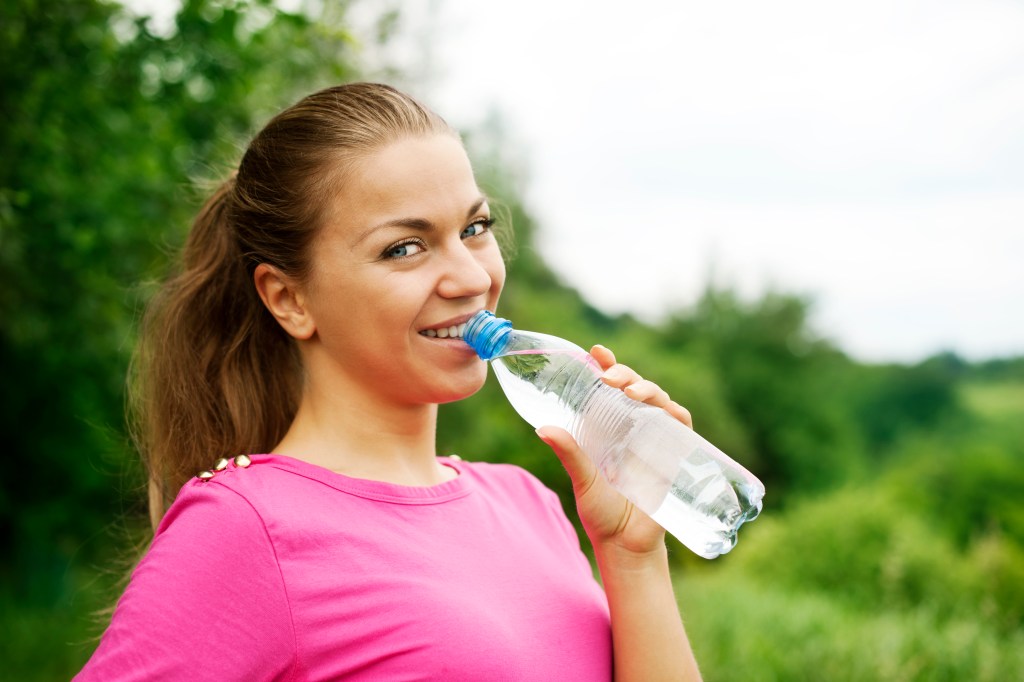
Water is the most important component in our body.
Our body can survive several days without food, months or even years without certain vitamins and minerals, but only a few days without water, while our energy is reduced if we go without water for even a few hours.
The total content of the human body, on average, ranges from 55% to 70%.
Water is essential in all biochemical processes that take place in our body.
Water helps transport nutrients to the body’s tissues, eliminates harmful metabolic products, maintains healthy joints, controls body temperature, and helps treat constipation.
The nutrients in water are little, but essential for the body, amounts of calcium, magnesium, potassium, sodium, sulfur, chlorine, bicarbonate, nitrite and nitrate.
The human need for water depending on their age and provided that they eat a balanced diet that contains sufficient amounts of vegetables and fruits, which are the main source of fluids for the body, is as follows:
1-3 year old children, 3-4 glasses* of water
4–8 year old children, 4-5 glasses* of water
9–13 year old children, 6-8 glasses* of water
14–18 year old children, 8-10 glasses* of water
>18 years old, 6-8 glasses* of water
Pregnant women, 7-9 glasses* of water
Breastfeeding women, 9-11 glasses* of water
(*)1 glass = 250 ml
Also add another 2 glasses of water every day, if you exercise or even more depending on the exercise and its duration.
Add more water if you live and much more if you do manual work, especially in a hot climate.
Fluid loss of 1% of body weight affects the body’s thermoregulation and creates the feeling of thirst, fluid loss of 2% causes discomfort, loss of appetite and intense thirst, fluid loss of 3% causes dry mouth, fluid loss of 4% causes a decrease in work capacity by 20-30%, while at 5% headache occurs, at 10% dehydration is now life-threatening.
The color of urine during urination is an indication of dehydration (as long as no medications or vitamins are consumed that change the color of urine).
Transparent urine means over-hydration, light yellow or yellow color means hydration, orange color means slight dehydration, deep orange color means dehydration.
Dehydration or even chronic insufficient hydration is associated with nephrolithiasis but also possible obesity.
The thirst reflex weakens with age, so the elderly are at increased risk for dehydration.
Excessive water consumption is extremely rare but can also prove dangerous to health because it dilutes electrolytes in the body and mainly sodium levels decrease, resulting in hyponatremia or water intoxication.
Athletes and Water
Dehydration can affect athletes more than non-athletes.
Dehydration affects:
Performance. Water softens joints, and dehydration affects an athlete’s flexibility and speed.
Endurance. Hydration is essential for proper muscle (and heart) function and helps you avoid cramps.
Breathing. When we inhale, you need fluids to moisten the air so that it is easier for us to absorb oxygen through our lungs.
Mood. Your brain is 73% water, it needs water to function, and dehydration can affect mood and concentration, and cause headaches and irritability.
Practical shooting and water
As in other sports, hydration is important, especially during a match.
Performance, concentration, and endurance will certainly be affected by possible dehydration.
Usually, the hydration of the competitive practical shooting athlete begins 1 day before the match, so that he is hydrated during the match.
Salt consumption leads to water reabsorption by the kidneys and ultimately to fluid retention in the body due to the sodium it contains. It is a very good idea to add salt to our food 1 day before the match.
The consumption of complex carbohydrates and not a lot of fiber 1 day before the match will help in partial beneficial fluid retention to avoid dehydration. 1 gram of carbohydrate retains approximately 3 – 4 grams of fluid in the body.
In the event of a large intake of carbohydrates, the body will retain the fluids it needs and will excrete the rest in urine.
The consumption of large amounts of caffeine during a match is not beneficial and will lead to dehydration (due to its diuretic effect) if adequate amounts of water are not consumed at the same time.
Adequate hydration will be maintained during a match by consuming fruits (which are rich in water), as well as isotonic drinks (which are rich in water and minerals that water intake is not sufficient to replenish in such a short period of time as the duration of a match).
 Diet gun
Leave a comment