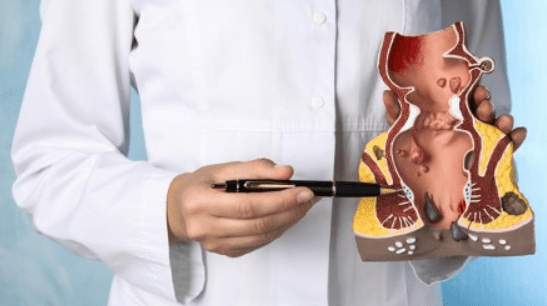
Hemorrhoids are normally found inside the anus. They help with defecation and stool retention, they look like small sacs filled with blood and are venous plexuses.
When these sacs lose their support due to the constant and intense effort to defecate, they hang outside the anus, fill with blood and swell.
Complications of hemorrhoids are pain, with or without the presence of blood, and severe swelling of the hemorrhoids.
Any action that can cause an increase in pressure in the intestinal lumen (constipation, straining, coughing, sneezing, lifting weights) will increase the pressure inside these plexuses (sacs) and further aggravate the hemorrhoids by swelling them. Once this pressure stops, these pouches try to return to their original size.
Factors that contribute to the formation of hemorrhoids are heredity, constipation, straining during defecation, persistent diarrhea, severe coughing, obesity, a sedentary lifestyle, standing, old age, pregnancy, and a diet low in fiber.
The following foods should be avoided when active hemorrhoids are present:
1. Spicy foods
chili peppers, pepper, hot sauces and meals containing spices, because they particularly irritate the digestive system by increasing its nervous movements and creating a tingling sensation when we have hemorrhoids.
2. Dairy products
High-fat dairy products such as whole milk, cheese and ice cream worsen symptoms, possibly due to the lactose present in milk and can create symptoms of bloating throughout the digestive system.
3. Fried and fatty foods
Fried foods, fatty meats and foods cooked in hydrogenated oils slow down digestion and can lead to constipation.
4. Processed foods
Fast food, snacks, sweets have no fiber and cause constipation.
5. Alcohol
High alcohol consumption creates dehydration, which can harden stools and make bowel movements slow, difficult and painful.
6. Caffeine
Coffee, tea, energy drinks, act as diuretics leading to dehydration and, consequently, constipation.
Caffeine also stimulates the nervous movements of the intestine, increasing pain during defecation.
7. White flour
It is a processed food and can lead to diarrhea and constipation. Also, its gluten content can create micro-inflammation in the intestine, worsening hemorrhoids.
The best foods that will help in the nutritional treatment of hemorrhoids are foods with fiber such as vegetables, fruits, legumes so that the intra-abdominal pressure of the intestine does not increase and constipation does not occur.
Olive oil, not fried, will help as a lubricant in the intestine. It is also necessary to consume enough water to avoid dehydration and to prevent the stool from hardening in the intestinal lumen.
 Diet gun
Leave a comment