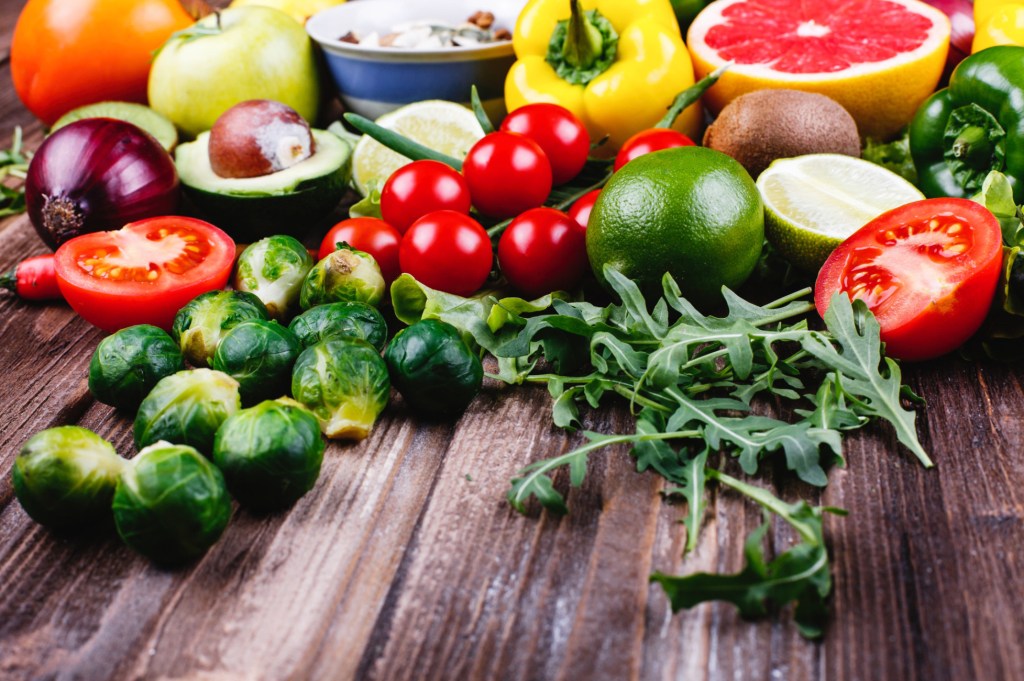
Fruits and vegetables are usually classified based on their botanical structure.
Fruits contain seeds and come from the flowering part of the plant.
Vegetables are the edible parts of a plant, its leaves or roots, its bulbs, its stems.
Both fruits and vegetables contain mainly vitamins, minerals, fiber and other nutrients.
Botanists classify certain “savory” products as fruits, such as tomatoes, while most people usually define fruits by their sweetness and vegetables by their more savory taste. Sweet vegetables sometimes cause confusion as to their classification.
Here are fruits or vegetables that fit, or rather we fit, into both categories.
Tomato
Botanists classify the tomato as a fruit (it develops from the flower of the tomato plant and contains seeds inside), most people classify it as a vegetable due to its taste that does not have the sweetness of the fruit.
Cucumber
The cucumber, from a biological point of view, is a fruit, as it comes from the flower of the cucumber plant and contains seeds, but most people classify it as a vegetable, like the tomato.
Peppers
Peppers are fruits from a botanical point of view, as they come from the flower and contain seeds, but it is common to consider them a vegetable.
Rhubarb
Rhubarb belongs to vegetables, as it is the edible stalk of the plant, its stem. However, its sweet and sour taste makes it considered… a fruit.
Both fruits and vegetables are excellent sources of vitamins, minerals, antioxidants, fiber, and simple natural carbohydrates.
Red and orange vegetables (tomatoes, red peppers, beets, radishes, red onions and red cabbage, carrots, zucchini) are rich in antioxidants and carotenoids.
Dark and leafy greens (spinach, broccoli, arugula, cabbage, kale, Brussels sprouts, chicory, chard, asparagus, celery) are excellent sources of vitamin K, folate, fiber, and carotenoids.
Blue or purple vegetables (eggplant and purple cabbage, purple cauliflower) are rich primarily in anthocyanins, which have anti-inflammatory and antimicrobial properties.
Both Fruits AND Vegetables
We must eat both fruits and vegetables to be healthy as they offer different nutrients essential to the human body.
Fruit consumption should be from 3 to 5 daily, while vegetable consumption should be from 2 to 4 cups daily, always in healthy organisms.
 Diet gun
Leave a comment