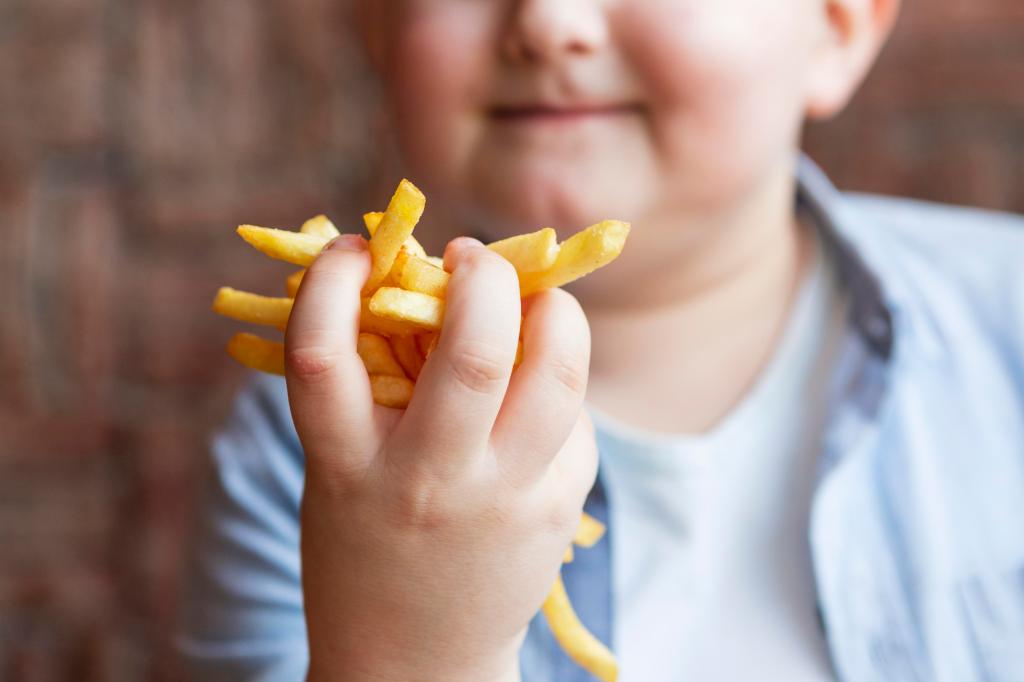
Obesity is the excessive accumulation of body fat, beyond normal limits.
It is mainly caused by an imbalance between caloric intake and burning (sedentary life, poor diet), but is also influenced by genetic, hormonal and psychological factors.
Childhood obesity is the result of various factors such as diet, lifestyle, age, gender and heredity.
Children who have both obese parents have an approximately 80% chance of becoming obese.
Children who have one obese parent have an approximately 40% chance of becoming obese.
Children who do not have an obese parent have an approximately 8% chance of becoming obese.
Lifestyle and childhood obesity
Obese parents usually consume foods rich in fat, calories and processed foods, teaching their children the same wrong way of eating.
Physical activity and childhood obesity
Reduced physical activity (sedentary life, internet, online games, television) also has a reduced energy expenditure, resulting in obesity.
Nutrition and childhood obesity
Diet is decisive for body weight.
The Mediterranean diet (high consumption of olive oil, fiber, fruits, vegetables, legumes, whole grains, nuts, moderate consumption of fish/poultry and low consumption of red meat, restriction of sweets, soft drinks, fast food and processed foods) prevents obesity.
Problems caused by childhood obesity
Obesity children have more psychological problems, bone problems and sleep apnea.
As adults they are more likely to be obese, have cardiovascular diseases, hypertension, hyperlipidemia, and develop diabetes.
Long-term childhood obesity that persists into adolescence has consequences in addition to physical ones on the child’s mental health.
Treatment of childhood obesity
The goals are the following:
1) Not to negatively affect the development of the obese child.
2) Return to the highest value allowed by the range of allowed weight
3) Understanding and applying the basic principles of nutrition
4) Long-term weight control
Basic practical changes in the diet of the obese child
1. Have three main meals (breakfast, lunch and dinner)
2. Have 2 snacks at school with healthy foods such as fruit, nuts (not sweets, croissants, chocolates, chips, etc.)
3. Have 1 snack between lunch and dinner again with healthy foods such as fruit, nuts (not sweets, croissants, chocolates, chips, etc.).
4. The breakfast should be rich in nutrients and not small in quantity, not e.g. just a glass of milk.
5. Consume mainly homemade food, limiting ready meals and processed foods to 1 per week.
6. Limit sweets, salty and fried foods to 1 time per week.
7. Drink water as your main drink (not juices or soft drinks).
8. Eat grilled or boiled fish up to 2 times per week.
9. Eat meat up to 3 times per week, with 1 of them being chicken or other poultry.
10. Eat legumes up to 2 times per week.
11. Eat plenty of fresh fruits and vegetables daily.
12. Eat whole grain bread and not white.
13. Pasta and rice should also be whole grain and not the common white ones.
Basic practical changes in the activity of the obese child
You must find a sports activity (football, basketball, swimming, track, gym) that he likes and do it at least 2 to 3 times a week.
Do not consider school gymnastics as systematic exercise.
Learning activities such as tutoring, computers, foreign languages, music, should not be considered more important than the sports activity that he likes.
Parents and childhood obesity
Support from parents must be undivided and uninterrupted not only in the preparation of food, meals, in the schedule of their observance and the daily plan in general, but also in the psychological field.
Connect with the child emotionally. It is not enough to love your child, you need to show it to him with actions every day, to listen to what he has to tell you without judging him and to share moments of tenderness with him.
Do activities together inside and outside the house, show him his skills and inclinations, listen to his thoughts, his feelings and his wants.
Set boundaries for him, because boundaries help children feel safe and later be able to set boundaries for themselves.
 Diet gun
Leave a comment