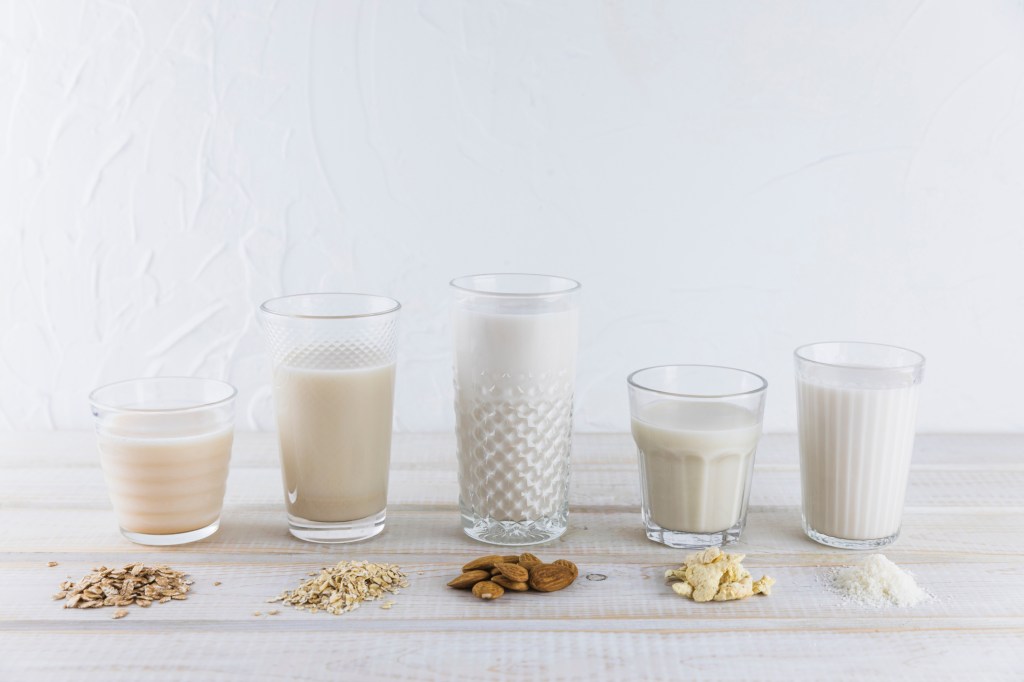
The Food and Drug Administration (FDA) has decided that liquid products that come from plant sources and have a texture similar to milk can use the word “milk” on their labels.
Soy, almond, coconut, pea, peanut, sesame “milk” are such plant products/beverages.
Of course, just because the FDA said so does not mean that these liquid products are milk.
The process of making this liquid that the FDA calls milk is the soaking of legumes or nuts or seeds, or grains, then mixing them with water and then straining to remove any solid stems that are still present. Then water is added again to make it liquid one more time, and vitamins, sweeteners, oils, stabilizers, thickeners and flavor enhancers are also added.
The discrediting of cow’s milk, mainly, due to its saturated fat content, allergenic factors and the presence of lactose it contains, has been visible since the appearance of these types of liquids that called them milk.
The FDA is probably trying to lay the foundations for a more artificial diet by limiting natural products and promoting artificial mixtures under the name of natural products.
This is clearly a form of propaganda as it targets the psychology of the crowd, projects, hatches and crystallizes this idea (that milk is the artificial vegetable liquid) so that it becomes definitive and irrevocable.
Time will tell why there is this insistence on promoting laboratory-created products as natural.
If you have ideas on this, I would be happy to write a comment.
What is the nutritional value of these products disguised as “milk”?
1. Low protein content
Apart from soy and pea liquid/“milk”, the rest of the plant-based blends are usually very low in protein.
Almond, rice and coconut milk usually do not have more than 2 grams of protein per cup, unless they are fortified with protein!
2. They are NOT that nutritious
The vitamin and mineral content of these drinks is low, unless…. they are fortified with vitamins and minerals to make them more nutritious, similar to cow’s milk.
They also do not contain iodine, which cow’s milk naturally contains.
It is, so far, difficult to enrich these plant-based foods with iodine. Iodine is essential for the production of thyroid hormones.
There is a wide variation in micronutrients depending on the brand of these plant-based drinks.
None of these plant-based products have more zinc and phosphate than cow’s milk.
Only soy drink has more magnesium than cow’s milk, as soy is a good natural source of magnesium.
3. They usually contain a lot of sugar
Vanilla, cookies or chocolate flavors are sure to contain sweeteners.
A cup of liquid almond drink with chocolate can contain up to 15 grams of added sugar, which is 3 teaspoons of sugar!!!
Drinks made from peas or oats or rice usually have a higher natural sugar content than those made from nuts such as almonds and cashews, so they are enriched with less added sugar.
4. They often contain emulsifiers
The emulsifiers that these types of drinks contain are used to improve their texture, taste and shelf life.
Frequent consumption of foods with emulsifiers may have a negative effect on an increased risk of cardiovascular disease and disorders of the gut microbiome in the long term as all these types of chemicals act cumulatively in the body.
5. Help with a disproportionate financial cost to lose weight
These plant-based drinks usually have fewer calories than real milk. A cup of oat drink (without added sugar) has about 45 calories, while a cup of almond drink (without added sugar) has about 30 calories.
A cup of 2% fat cow’s milk has about 116 calories.
However, if these drinks have added sugar, their calorie count will increase.
The limited number of calories in these products is due to their high water content.
A cup of almonds has about 800 calories, while a cup of unsweetened almond drink has about 30 calories because it is almost all water.
If we want to include such drinks in our diet plan, we can do so as long as we do not base our plant-based food intake on these products.
They are not the foods that will provide us with health, let’s just use them as an alternative solution to break the monotony of our diet, that is, not often.
Let’s choose such drinks with as little added sugar as possible.
Soy and pea drinks have more protein than the rest.
Any enriched food, with whatever and if it is enriched, is also an unnatural food.
If we consume only enriched foods, we may soon not have any non-enriched (i.e. natural) foods to consume.
 Diet gun
Leave a comment